

Real Leather vs. Faux Leather Jackets in 2026: What the Smart Buyer Chooses

A leather jacket has always meant more than fashion. It’s protection against the elements, a symbol of independence, and often the most personal item in a person’s wardrobe. In 2026, however, choosing the right leather jacket has become more complex than ever before.
Advancements in faux leather technology, increased awareness around sustainability, and a shift away from disposable fashion have changed how people evaluate quality. The question is no longer just “Does it look good?” but “Will this jacket still make sense five, ten, or twenty years from now?”
At BFI Leathers, headquartered in Kalispell, Montana, we design and build genuine leather jackets meant to be worn hard and lived in for decades. While we firmly believe in real leather, this guide is written to help buyers make an informed decision in 2026, based on lifestyle, values, and long-term use—not marketing hype.
Let’s break down the real leather vs. faux leather debate as it truly stands today.
The Leather Jacket Market in 2026: A Shift Toward Longevity
By 2026, fashion trends have slowed. Consumers are buying fewer items, but demanding higher quality. Fast fashion is losing relevance, and durability has become a form of sustainability.
Leather jackets now sit in a category closer to footwear or outerwear investments rather than seasonal apparel. Buyers want jackets that:
- Last for years, not months
- Can be repaired instead of replaced
- Improve with age rather than degrade
This change in mindset is critical when comparing real and faux leather.
Understanding Real Leather in 2026
Real leather is still made from animal hides—cow, lamb, goat, sheep, or buffalo—but how that leather is sourced, tanned, and finished matters more than ever.
The Real Leather Quality Hierarchy (Still Relevant)
- Full-Grain Leather
The highest quality available. It uses the top layer of the hide, retains natural grain, and develops a rich patina over time. This is the leather BFI Leathers uses for the majority of its jackets. - Top-Grain Leather
Slightly sanded for uniformity. Still durable, but ages less dramatically. - Genuine Leather
A confusing term for consumers. It is real leather, but lower grade and often heavily processed. - Bonded Leather
Leather scraps fused together. Not suitable for serious jackets and best avoided entirely.
In 2026, educated buyers actively seek full-grain and top-grain leather, understanding that quality determines lifespan.
Why Real Leather Still Excels in 2026
Despite innovations in synthetics, real leather maintains advantages that technology has yet to replicate.
1. Durability That Improves With Age
A real leather jacket doesn’t wear out—it wears in. Creases, fading, and softening create a jacket that becomes uniquely yours.
2. Natural Temperature Regulation
Real leather insulates in cold conditions and breathes in heat. This makes it suitable for everything from Montana winters to desert highways.
3. Abrasion Resistance
For motorcycle riders, this is non-negotiable. Real leather continues to outperform faux materials in slide and abrasion testing.
4. Repairability
Scratches, tears, and fading can be repaired, re-dyed, or conditioned. Faux leather usually cannot.
5. Sensory Experience
The smell, weight, texture, and movement of real leather are impossible to replicate synthetically—even in 2026.
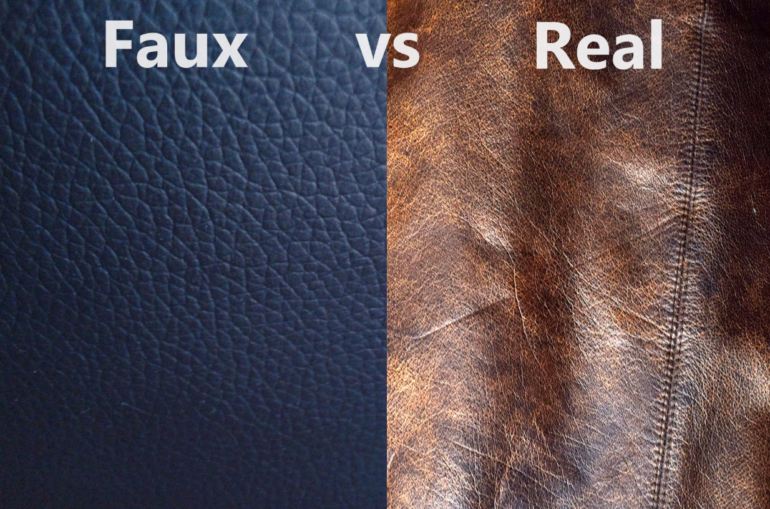
Faux Leather in 2026: A Massive Improvement, With Limits
Faux leather has come a long way. The shiny, stiff “pleather” of the early 2000s is largely gone.
Modern Faux Leather Materials Include:
- Advanced polyurethane (PU) with microfiber backing
- Plant-based alternatives (cactus, apple, mushroom, pineapple)
- Recycled plastic composites
High-end faux leather in 2026 can look impressive and feel soft out of the box. For casual wear, it often performs well—at least initially.
Where Faux Leather Wins in 2026
Faux leather makes sense when:
- Vegan or cruelty-free values are essential
- Budget is limited
- Fashion trends change frequently
- Lightweight wear is preferred
- Zero maintenance is required
For urban commuting, social wear, or short-term use, faux leather can be practical.
Side-by-Side Comparison: Real vs. Faux Leather (2026)
Feature | Real Leather (BFI Leathers Standard) | High-End Faux Leather (2026) |
Lifespan | 20–50+ years | 5–10 years |
Aging | Develops unique patina | Uniform fading or peeling |
Breathability | Excellent | Moderate |
Abrasion Resistance | Outstanding | Limited |
Cold Weather | Flexible & insulating | Can stiffen or crack |
Heat & Humidity | Naturally regulating | Can feel clammy |
Maintenance | Occasional conditioning | Wipe clean |
Repairability | High | Low |
Sustainability | Long lifespan reduces waste | Shorter lifecycle |
Sensory Experience | Rich smell, weight, texture | Neutral, synthetic |
The Sustainability Question in 2026
Sustainability conversations have matured. It’s no longer just about what something is made of, but how long it stays in use.
A real leather jacket that lasts 30 years creates significantly less waste than five faux jackets replaced every few years. Longevity has become a key sustainability metric in 2026.
When Real Leather Is the Better Choice
Real leather is the right option if:
- You ride a motorcycle, even occasionally
- You want a jacket that lasts decades
- You value craftsmanship and aging character
- You live in extreme or changing climates
- You prefer repairing over replacing
Many BFI Leathers customers still wear jackets purchased years ago—each one telling a personal story through wear.
When Faux Leather Makes More Sense
Choose faux leather if:
- Vegan ethics are non-negotiable
- Budget constraints are primary
- You enjoy trend-driven fashion
- You want something lightweight and low-commitment
There is no wrong choice—only the right choice for your lifestyle.
The True Cost of Ownership (Most Buyers Miss This)
In 2026, smart consumers look beyond price tags.
A premium real leather jacket costs more upfront, but spread over decades, the annual cost is often lower than replacing faux jackets every few years.
Real leather is an investment. Faux leather is an expense.
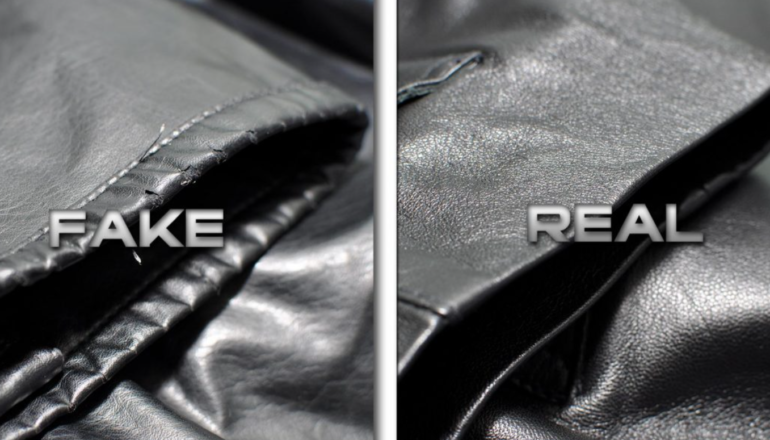
Red Flags to Avoid (Real or Faux)
Real Leather Warning Signs:
- Strong chemical smell
- Thin, plastic-like feel
- Extremely low price for “genuine leather”
- Lack of transparency about leather grade
Faux Leather Warning Signs:
- Persistent plastic odor
- High-gloss shine that never dulls
- Peeling within one season
- Visible fabric backing
Caring for Real Leather in 2026
Leather care remains simple:
- Hang properly
- Condition once or twice a year
- Avoid prolonged heat and sunlight
- Waterproof if needed
- Buff light scuffs by hand
Proper care ensures your jacket looks better in 2036 than it did in 2026.
Final Verdict: The Smart Jacket Choice in 2026
Choose real leather if:
- You want one jacket for decades
- You value durability and character
- You ride or live an active lifestyle
- You see clothing as an investment
Choose faux leather if:
- Vegan values are essential
- Budget and trends matter most
- Maintenance must be effortless
At BFI Leathers, we design jackets the old-fashioned way—with attention to detail, premium hides, and a belief that some things should be built to outlast trends.
Explore our 2026 collection of biker jackets, café racers, bombers, and more at:
👉 https://bfileathers.com/
Trends fade.
Craftsmanship remains.
Choose the jacket that earns its place in your life.
Search
Related Blogs
Men’s Hooded Leather Jackets: Timeless Fashion with Modern Comfort
January 21, 2026

The Ultimate Guide to Men’s Biker and Racer Leather Jackets
January 19, 2026